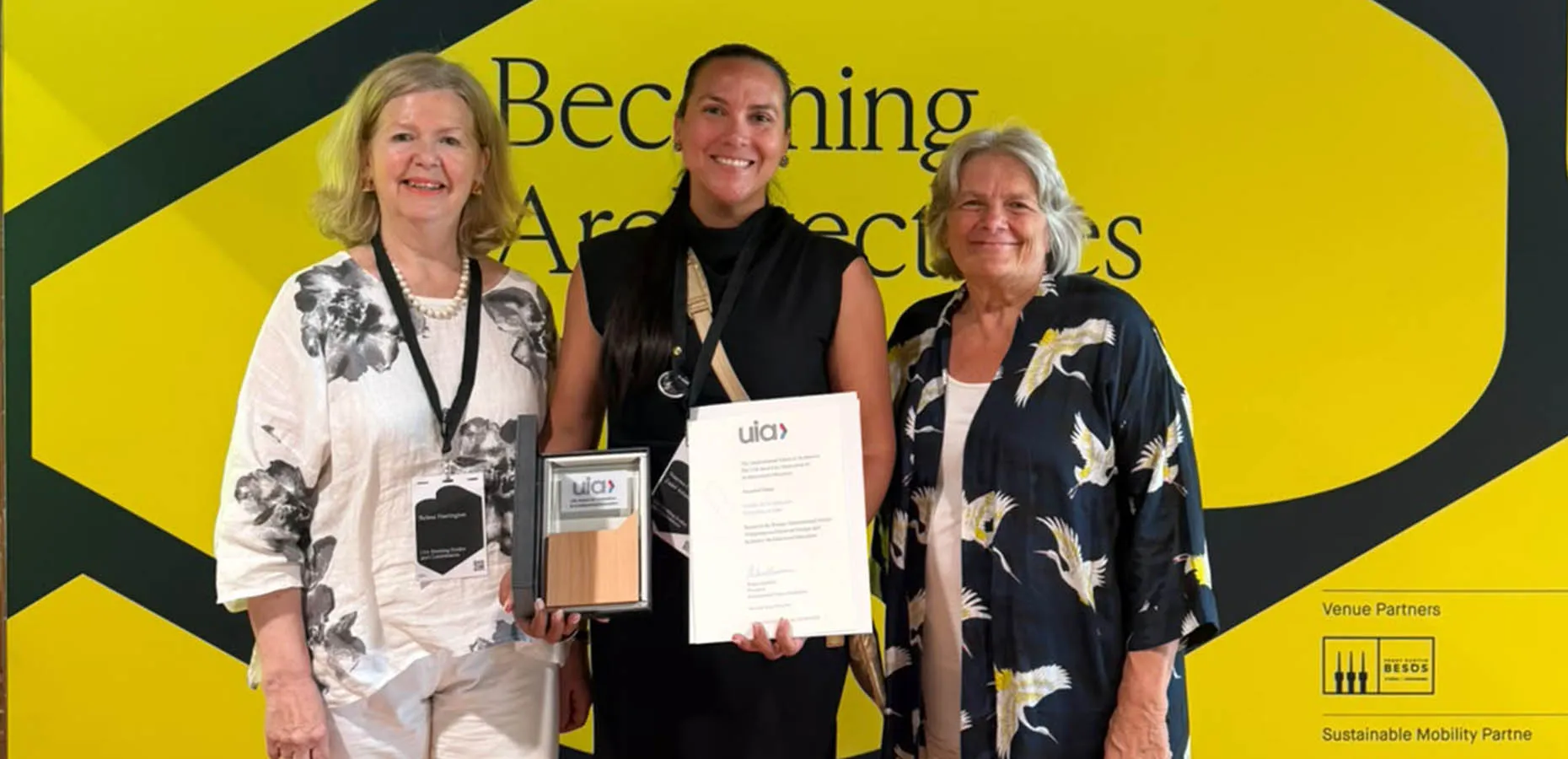
The School of Architecture at Universidad de Lima has been honored with the International Award for Innovation in Architectural Education by the International Union of Architects (UIA), a global organization that brings together professional architecture associations from more than 100 countries.
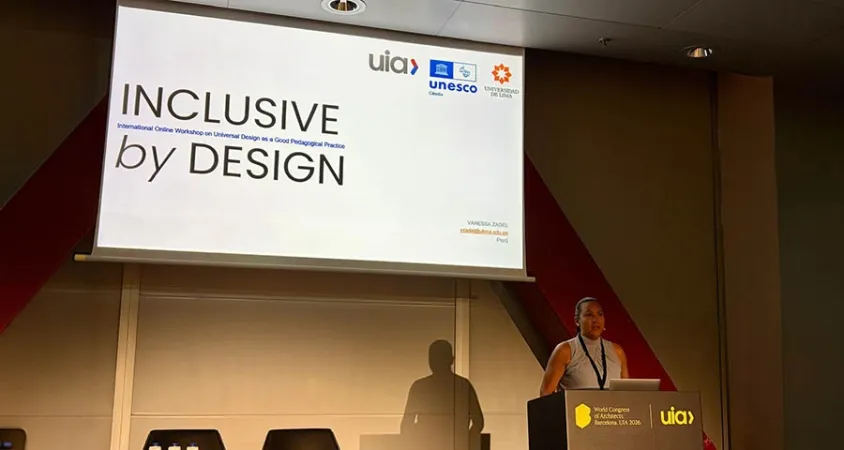
The award was accepted by Vanessa Zadel, professor and academic secretary of the School of Architecture, during the UIA World Congress of Architecture in Barcelona. “This award recognizes our efforts to promote accessible and inclusive design as part of our teaching model,” Zadel said.
The distinction recognized the international workshop Inclusive by Design, an initiative led by Vanessa Zadel through Vertical Studio 10 and organized in collaboration with faculty members Gonzalo La Hoz, Amada Núñez, Krishtian Román, Lucía Villanueva, José Panduro, Romina Portilla, Ariana Stisin, and Valeria Lissa. The workshop brought together nearly 200 students and faculty members from Universidad de Lima and leading universities across Argentina, Egypt, Spain, Indonesia, Malaysia, and the Philippines. For two weeks, participants worked in international teams to create inclusive design proposals focused on addressing challenges related to social interaction in public spaces. An innovative feature of this initiative was the active participation of students with intellectual disabilities from Universidad CEU San Pablo in Spain, who contributed directly to the design process.
The jury recognized the project for “making inclusion a lived and collaborative part of the design process, rather than simply a requirement, by giving diverse users—including students with intellectual disabilities—an active role in shaping design decisions.”
During the final stage, 20 specialists in accessibility and inclusive design from the UIA’s Architecture for All team evaluated the projects. The specialists represented 14 countries: Spain, Australia, Ireland, Hong Kong, Greece, Italy, Mexico, Malaysia, Nigeria, Egypt, Chile, Canada, Indonesia, and the Philippines. “We place particular emphasis on accessible and inclusive design and its impact on people, as well as on the potential of design decisions to create positive change,” Zadel noted.
This initiative positions Universidad de Lima as a pioneer in promoting universal design in architectural education and further consolidates its leadership in this area. Several schools of architecture from around the world have already expressed interest in participating in a future edition of the workshop.
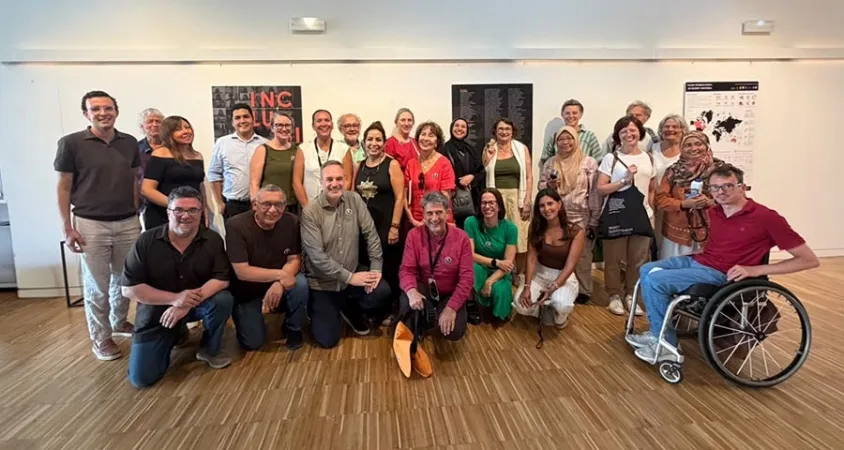
During the week of the UIA World Congress of Architecture, the projects selected for the final stage were exhibited. In collaboration with the Barcelona City Council’s Accessibility Office, they were also showcased at the Baró de Viver Civic Center, where visitors can view the exhibition throughout this month.