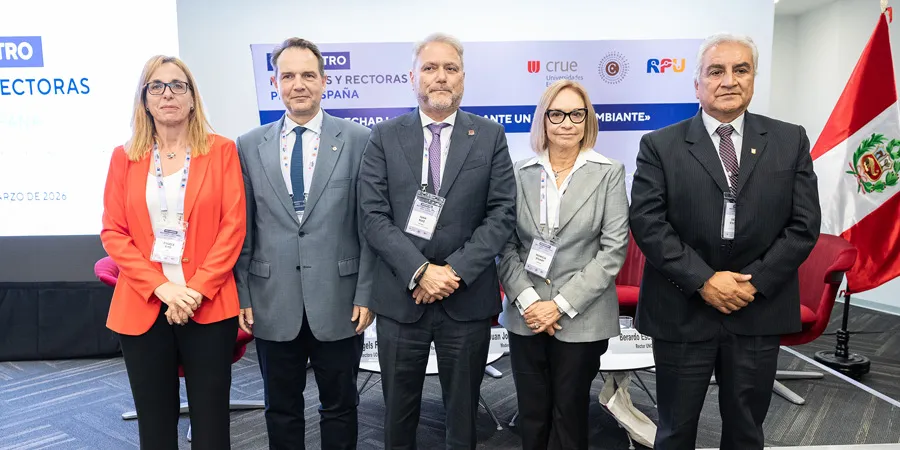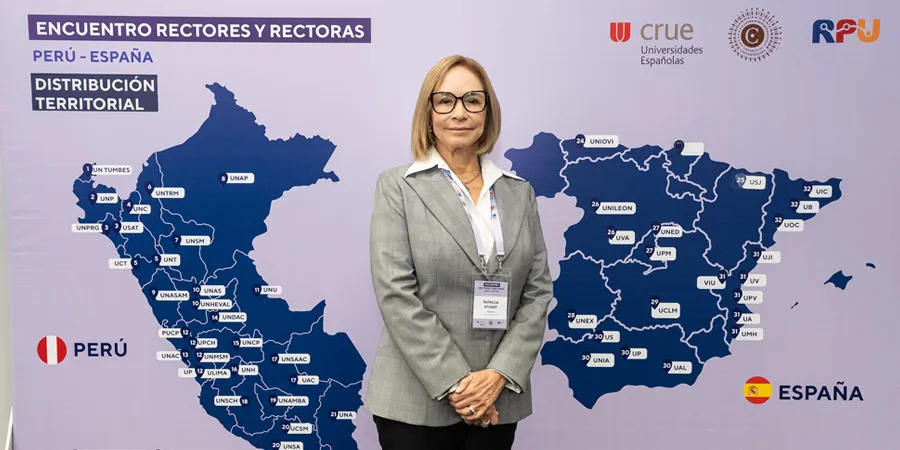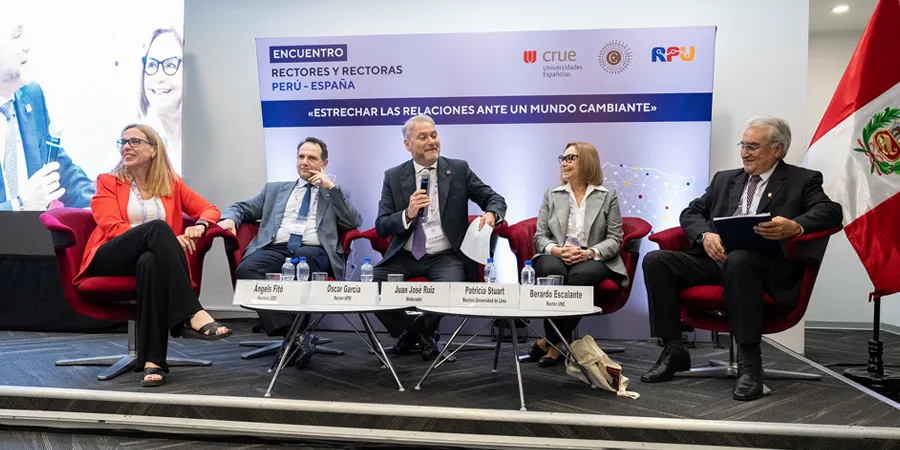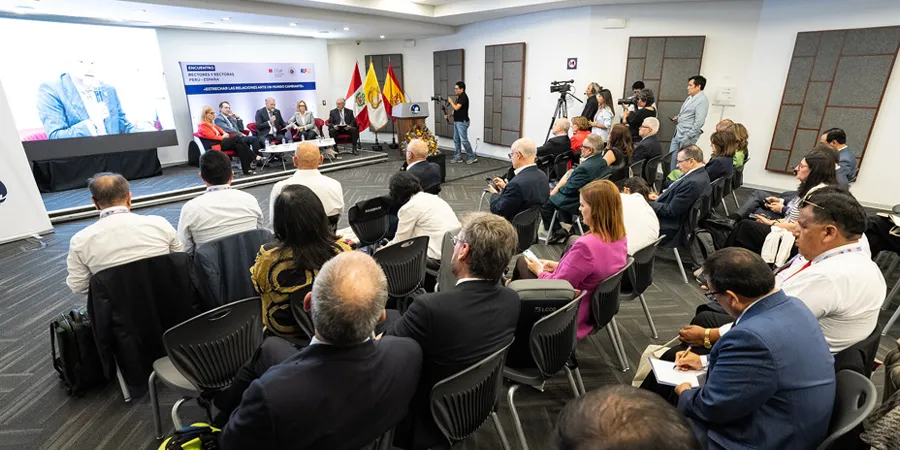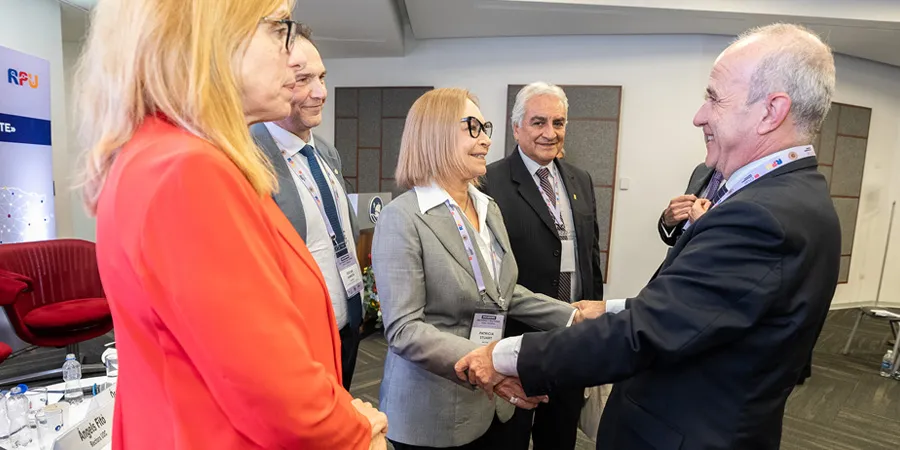
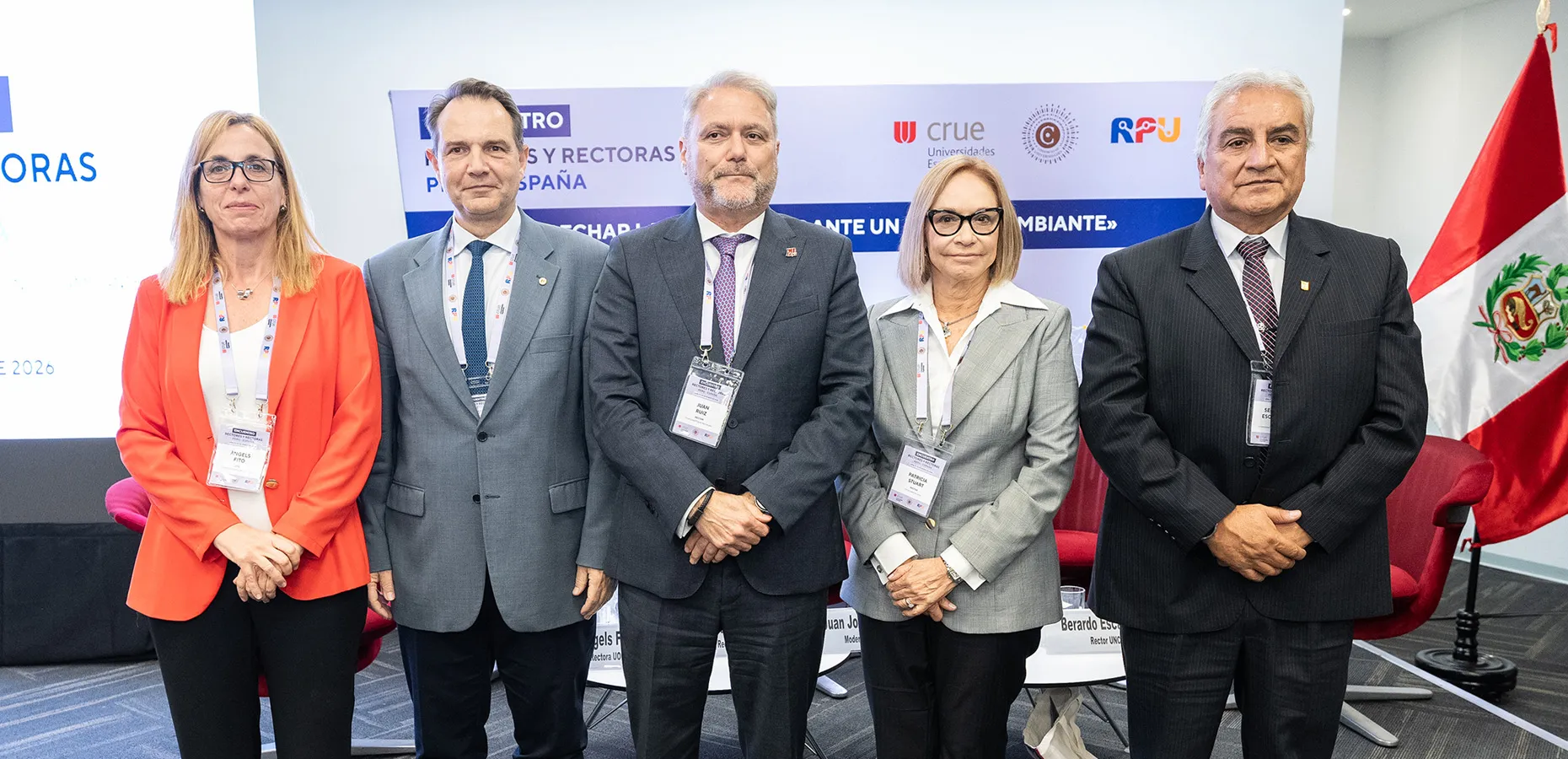
Patricia Stuart, Rector of Universidad de Lima, addressed how artificial intelligence is reshaping teaching, research, and institutional management in higher education during the panel “The Challenges of Artificial Intelligence,” held as part of the Encuentro de Rectores y Rectoras Perú-España: “Estrechar las relaciones ante un mundo cambiante” (Peru–Spain Rectors Summit, “Strengthening Ties in a Changing World”).
The session provided an opportunity to examine how this technology is transforming educational practices, redefining workforce competencies, and raising ethical considerations that universities must address.
Held in Lima on March 9–10, the meeting was organized by Crue Spanish Universities in partnership with Pontificia Universidad Católica del Perú and brought together more than 30 university leaders from Peru and Spain. The agenda featured roundtable discussions on academic cooperation, educational innovation, employability, and the impact of artificial intelligence on professional preparation.
Artificial Intelligence: A Transformative Force in Higher Education
In her remarks, Patricia Stuart emphasized that artificial intelligence extends beyond a technological tool and represents a force that is reshaping the foundations of higher education.
“We see artificial intelligence as an infrastructural shift in education. It is transforming how knowledge is acquired and processed, as well as job roles and the skills required in today’s workforce,” she explained.
Rector Stuart also highlighted Universidad de Lima’s progress in integrating artificial intelligence across its academic ecosystem. A key milestone is the creation of the Center for Responsible Artificial Intelligence (CIAR), which promotes faculty development, applied research, and partnerships with the productive sector.
The University is also implementing pilot initiatives to incorporate artificial intelligence into the learning experience. “We have launched a pilot program in which undergraduate students interact with AI agents, using faculty-curated materials to simulate exams, generate summaries, and conduct literature searches,” she noted.
The panel also featured Àngels Fitó, Rector of Universitat Oberta de Catalunya; Óscar García, Rector of Universidad Politécnica de Madrid; and Berardo Escalante Zumaeta, Rector of Universidad Nacional de Cajamarca. Participants agreed that artificial intelligence represents one of the most significant challenges currently facing higher education.
They emphasized that integrating AI into universities requires not only technological adaptation, but also pedagogical, ethical, and institutional transformation. In this context, they underscored the importance of strengthening critical thinking, ethical formation, and human-centered skills among students.